
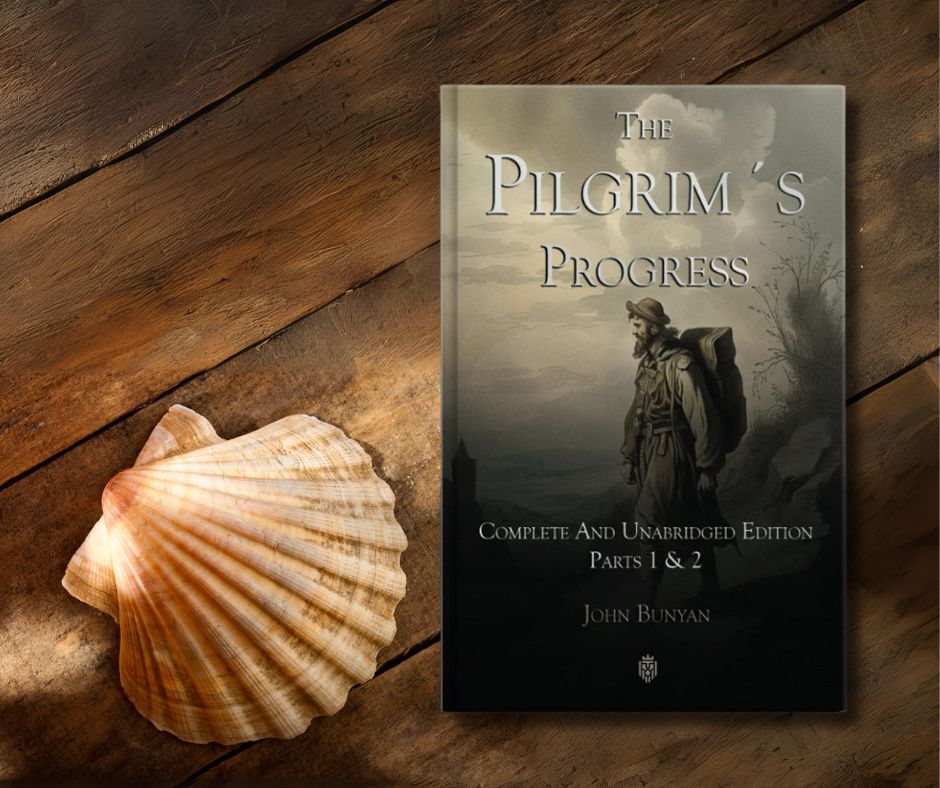
The Pilgrim´s Progress by John Bunyan
- Spiritual journey
- Moral allegory
- Redemption quest
The Pilgrim’s Progress: A Journey of Faith and Perseverance
First published in 1678, John Bunyan’s The Pilgrim’s Progress stands as one of the most influential works of Christian literature in the English language. Written while Bunyan was imprisoned for preaching without a license, this allegorical narrative has endured for centuries as a profound meditation on the inner journey of the soul.
A Spiritual Allegory of Enduring Power
The story follows Christian, an everyman figure, as he flees the City of Destruction and sets out on a perilous pilgrimage to the Celestial City. Along the way, he encounters trials, temptations, and figures both helpful and hostile—Faithful, Evangelist, Hopeful, Apollyon, and the inhabitants of Vanity Fair. Each stage of his journey is rich with spiritual symbolism, illustrating the struggles and consolations of the believer’s life.
Bunyan’s use of plain language and vivid metaphor gives the narrative both accessibility and emotional force. Though rooted in Puritan theology, the book transcends its historical setting through its portrayal of doubt, perseverance, repentance, and grace.
Written in Prison, Read Across Centuries
John Bunyan, a nonconformist preacher in Restoration England, composed this work while imprisoned for his refusal to submit to the established church. In doing so, he created a text that blends personal conviction with literary invention. Its popularity was immediate and lasting—translated into more than 200 languages, it has never been out of print.
The work’s influence extends far beyond religious circles. From the novels of Nathaniel Hawthorne to the speeches of Martin Luther King Jr., *The Pilgrim’s Progress* has shaped the language and imagination of generations. Its enduring appeal lies in its honesty: the Christian life is not easy, but it is purposeful.
Structure and Legacy
The book is divided into two parts. The first recounts Christian’s journey; the second follows his wife, Christiana, and her children, underscoring the communal and generational nature of spiritual pilgrimage. Though less widely read, the second part complements the first with a gentler, more pastoral tone.
As both a devotional work and a literary achievement, *The Pilgrim’s Progress* occupies a unique place in the Christian tradition. It speaks across denominations and centuries, offering encouragement to readers navigating their own path through uncertainty and hardship.
Additional information
| Author | John Bunyan |
|---|---|
| Pages | 318 |
| Size | 6 x 9 in |
| Collection | Faith & Spirituality |
| Imprint | King Solomon |